
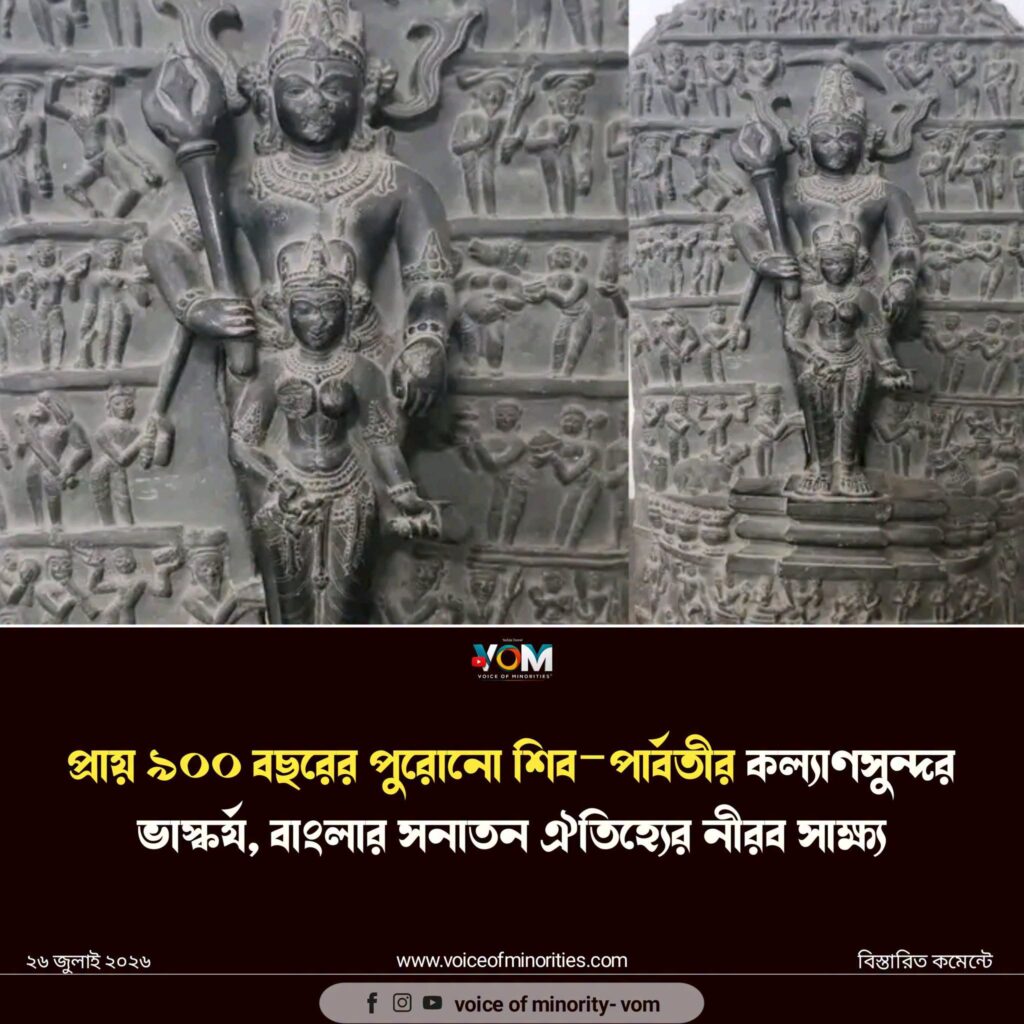
26 July, 2026- VOM:- The Kalyanasundara sculpture depicting Lord Shiva and Goddess Parvati, preserved at the Bangladesh National Museum, is a valuable archaeological artifact representing Bengal’s Sanatan religious and cultural heritage. According to art-historical sources, the sculpture dates back to the 12th century, making it approximately 800 to 900 years old as of 2026.
The Kalyanasundara motif artistically portrays the sacred marriage of Lord Mahadeva Shiva and Goddess Parvati. The sculpture depicts the panigrahana (the ritual of holding hands during the marriage ceremony), along with other wedding rites and attendant figures, reflecting the religious beliefs of Sanatan Dharma and the artistic vision of medieval Bengal.
In Sanatan philosophy, Shiva and Shakti are inseparable. Lord Mahadeva Shiva symbolizes supreme consciousness and the ultimate reality, while Goddess Parvati embodies the primordial divine energy, or Adyashakti. Their divine marriage, therefore, is not merely the union of two deities but represents the eternal union of Shiva and Shakti.
Created nearly nine centuries ago in Bengal, the sculpture demonstrates the deep roots of Sanatan traditions in the region’s art, religion, and culture. Beyond its religious significance as an ancient sacred image, it also serves as an invaluable historical record of Bengal’s artistic and cultural heritage.
The preservation, scholarly study, and presentation of such archaeological treasures to future generations remain of great importance. This sculpture is not merely a stone carving depicting the marriage of Shiva and Parvati; it stands as a silent witness to the ancient Sanatan faith, artistic excellence, and enduring cultural legacy of Bengal.