25 December 2005, VOM:- A Hindu youth was beaten to death after being branded an “extortionist” by a group of local residents in Pangsha upazila of Rajbari district, Bangladesh.
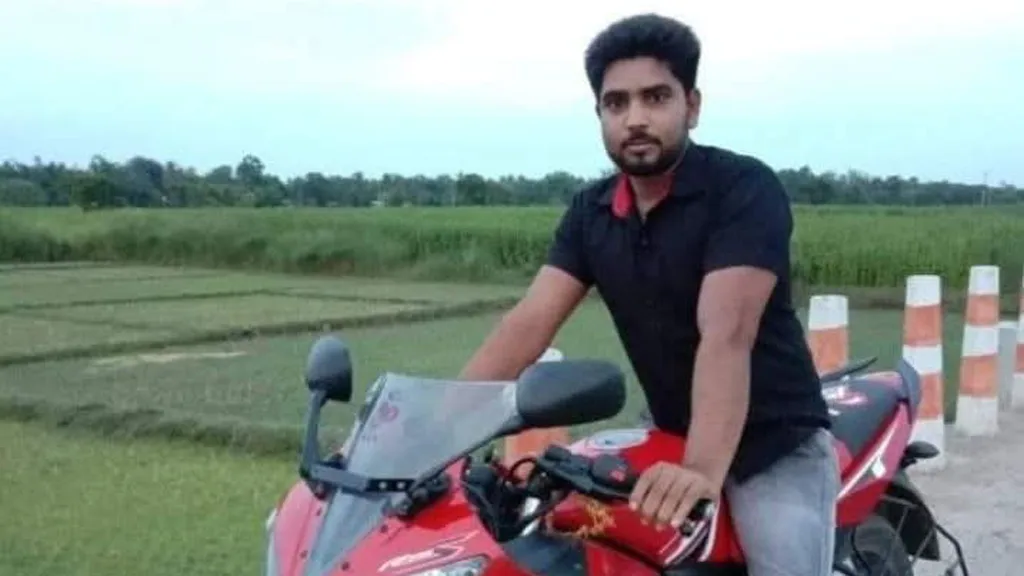
The victim has been identified as Amrit Mondal (also known as Samrat), son of Akshay Mondal, a resident of Hosendanga village under Kalimahar Union.
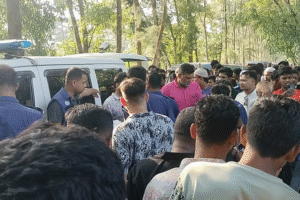
According to local sources, the incident took place on Wednesday night around 10:45 pm in Hosendanga village. Witnesses alleged that Amrit Mondal was detained by local people after being accused of demanding extortion money and was brutally beaten, leading to his death at the scene.
However, the police version of the incident differs from the family’s claims.
Officer-in-Charge (OC) of Pangsha Model Police Station, Sheikh Moinul Islam, claimed that Amrit Mondal was the leader of a so-called criminal group named “Samrat Bahini.” Police alleged that he went to the house of Shahid Sheikh, a local resident, to demand extortion money. When the family refused to pay, they reportedly raised an alarm shouting “robber, robber,” prompting nearby locals to gather and assault him.
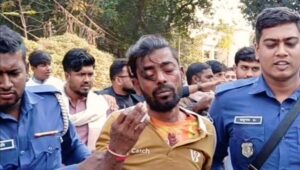
Police further stated that during the incident, one individual named Selim was caught with two weapons and handed over to law enforcement by local residents.
The police also claimed that Amrit Mondal had multiple criminal cases, including murder and extortion, and had recently returned from India, where he had allegedly been in hiding for a long time.
In contrast, Amrit Mondal’s family and several local residents, speaking on condition of anonymity, strongly denied the police allegations. They described the killing as a planned murder, alleging that false accusations were deliberately used to justify lynching him.
The family claimed that the narrative of extortion was fabricated and that the youth was intentionally targeted and killed.
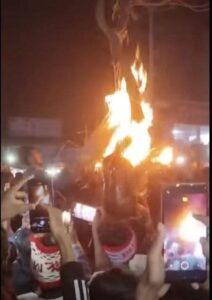
The incident has drawn comparisons with a recent case in Bhaluka, Mymensingh, where a garment worker named Dipu Chandra Das was beaten, stripped, and burned alive over an alleged case of religious blasphemy. Subsequent investigations by law enforcement found no evidence of blasphemy, revealing that the accusation was spread due to a promotion-related workplace dispute.
These incidents have once again raised serious concerns over mob violence, misuse of allegations, and the safety of religious minorities in Bangladesh, as well as the growing tendency of taking the law into one’s own hands.