27/12/2025 Voice Of minority-VOM:- As Bangladesh prepares for the 2026 national election, deep anxiety is spreading among religious and ethnic minority communities over their safety, political inclusion, and ability to exercise voting rights freely. Speakers at a recent roundtable discussion warned that fear, violence, and systemic exclusion could significantly undermine democratic participation if urgent measures are not taken.
The concerns were raised by the Bangladesh Hindu Buddhist Christian Unity Council (BHBCUC), which said minorities across the country are facing persistent threats and intimidation, particularly during election periods.
Voting Under Threat
Manindra Kumar Nath, acting general secretary of the Oikya Parishad, said members of minority communities often become targets simply for participating in elections.
“Whether in local or national elections, minorities are frequently threatened, attacked, or harassed for voting in favour of or against particular candidates. If the government and the Election Commission fail to guarantee security, many will hesitate to go to polling centres at all,” he said.
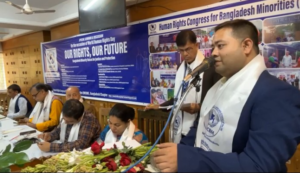
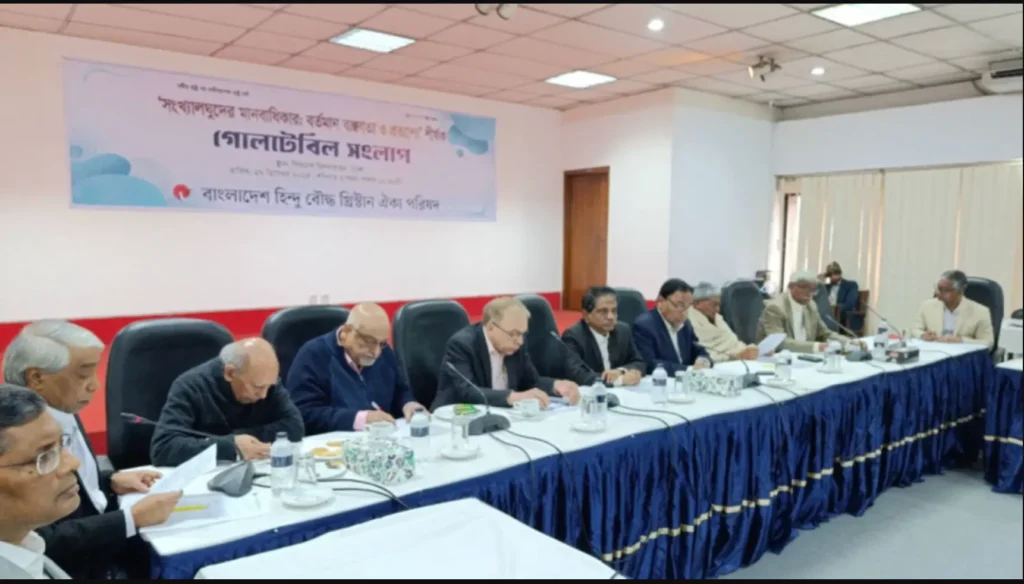
He made the remarks while presenting a concept paper at a roundtable titled “The Current Reality and Expectations of Human Rights of Minorities”, held at the CIRDAP auditorium in Dhaka.
Nath also warned that certain political and social groups are openly violating electoral codes of conduct and exploiting religion for political gain—an approach that, he said, has heightened insecurity ahead of the election.
Rising Violence Despite Interim Government
According to data cited from media reports, communal violence has continued even during the tenure of the interim government. Nath said that between August 4 and December 31 of last year, at least 2,184 incidents of violence against religious and ethnic minorities and indigenous peoples were reported. From January 1 to November 30, 2025, a further 489 incidents were recorded.
Alarmingly, December alone saw five murder cases linked to communal violence.
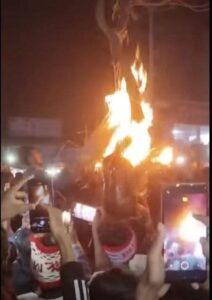
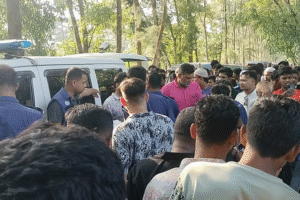
Among them, the killing of Dipu Chandra Das in Bhaluka, Mymensingh, on December 18 drew international attention. He was allegedly accused of blasphemy, brutally killed, his body hung from a tree, and later set on fire—an act Nath described as having “shocked the global conscience.”
Denial and Frustration
Nath further criticised what he described as a tendency within the government to dismiss post–August 5 communal attacks by labelling them merely as “political violence.”
“This denial deeply frustrates minority communities,” he said, adding that while police authorities later partially acknowledged the reality, the initial response eroded trust.
Warnings on Divisive Politics
Economist Debapriya Bhattacharya cautioned that politics rooted in religious or ethnic division could have long-term consequences for the country.
“Such politics will weaken our sovereignty, fragment society, and damage the economy. In the long run, it will also harm Bangladesh’s international standing and relations,” he said.
He noted that religion-based political strategies are making the pre-election environment increasingly volatile and urged Bangladesh not to view its religious minorities through the same geopolitical lens it uses for neighbouring countries.
Political Motives Behind Attacks
Echoing similar concerns, Transparency International Bangladesh Executive Director Iftekharuzzaman said attacks on minorities are rarely spontaneous or purely religious in nature.
“There is an organised political force behind many of these incidents. The objectives are partisanship, land grabbing, and establishing dominance,” he said.
He also criticised the lack of representation of religious minorities and women in the proposed framework for a referendum, and said the National Human Rights Commission has failed to act effectively in cases of minority persecution.
To address these gaps, he called for the formation of a Diversity Commission and urged the government to turn the draft anti-discrimination law into an ordinance to ensure immediate legal protection for minority communities.
Call for Accountability and Inclusion
The roundtable was chaired by Nirmal Rosario, one of the presidents of the Oikya Parishad. Other speakers included Fawzia Moslem, president of Bangladesh Mahila Parishad, and Subrata Chowdhury, chief adviser of the Bangladesh Puja Udjapan Parishad.
Speakers collectively stressed that without genuine political commitment, accountability, and inclusive representation, fears among minority communities will continue to grow—posing a serious challenge to free, fair, and participatory elections in 2026.