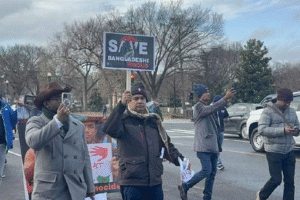
19 December 2025, Voice of Minority-VOM:- A leading human rights organisation has warned that violence and abuse against religious and ethnic minorities in Bangladesh are increasing at an alarming rate, describing the situation as a deepening structural human rights crisis rather than a series of isolated incidents.
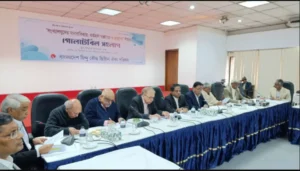
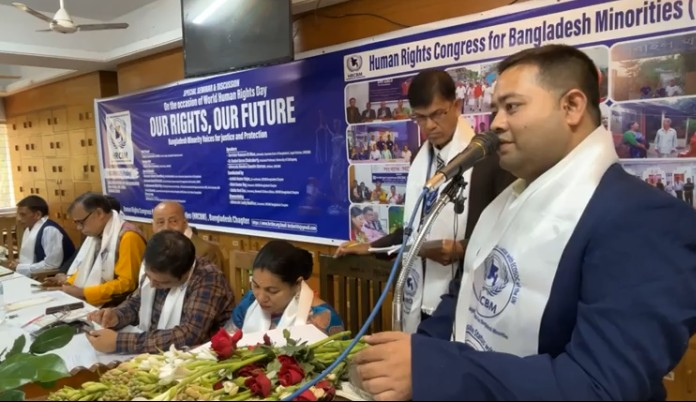
The warning was issued by Human Rights Congress for Bangladesh Minorities (HRCBM) at its national conference held in Dhaka on Friday.
Speakers at the conference said that attacks on minorities are being driven by a combination of impunity, political misuse of power and administrative inaction, creating an environment in which perpetrators are rarely held accountable.
Structural crisis, not isolated violence
Presenting the keynote address, Advocate Lucky Basar, the convenor of HRCBM, said the organisation is a rights-based, non-political and independent human rights body. She noted that HRCBM holds special consultative status with the United Nations Economic and Social Council (ECOSOC) and is a member of the NGO Coalition of the International Criminal Court (ICC).
She said the organisation has been working for years to protect the fundamental rights of minority communities in Bangladesh, promote justice and strengthen social harmony.
According to Ms Basar, HRCBM systematically documents incidents of minority persecution through field investigations, victim and eyewitness testimonies, media verification and legal analysis. These findings are used for national and international advocacy, while legal support is provided to victims where possible.
Dozens of incidents recorded in just 17 days
Data released at the conference showed that between 1 and 17 December 2025, HRCBM documented at least 54 separate incidents of violence and abuse against minority communities across the country.
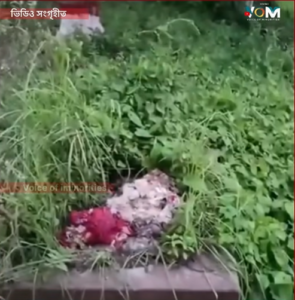
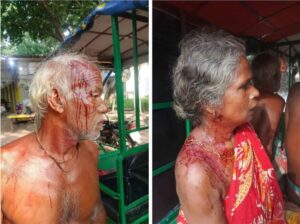
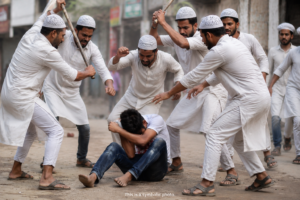
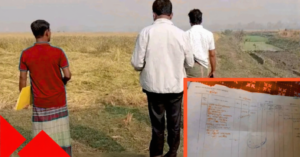
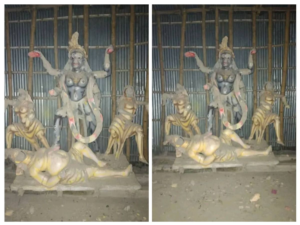
These included killings, suspicious deaths, attempted murders, physical attacks, land grabbing, illegal occupation of temples and cremation grounds, forced harvesting of crops, abduction, violence against women and children, and violations of religious sensitivity.
HRCBM also reported that during the first 17 days of December alone, 130 killings or suspicious deaths were recorded nationwide, of which at least 16 victims belonged to minority communities.
From January to 20 December 2025, the organisation claims that 104 minority individuals were killed or died under suspicious circumstances.
Women and children disproportionately affected
The situation for minority women and children was described as particularly severe. According to HRCBM’s preliminary 2025 report, at least 148 minority women were victims of disappearance, forced religious conversion, physical abuse, sexual violence or abduction during the year.
The report further claimed that in Jashore District, between January and November 2025, 223 women and children were victims of rape, with 136 of them belonging to minority communities.
At least 74 individuals were reportedly targeted over allegations of blasphemy during the same period.
Selective action and state failure
Ms Basar said that authorities often act swiftly when incidents go viral on social media, but many cases that do not receive online attention are quietly ignored.
She described the slow pace of investigation and prosecution in non-viral cases as clear evidence of state failure, adding that this selective enforcement of justice further emboldens perpetrators.
Speakers at the conference stressed that the statistics represent not just numbers, but broken families, destroyed lives and institutional neglect. They urged the state to recognise minority persecution as a serious human rights crisis rather than viewing it through a political lens.
Call for transitional justice
In response to the ongoing abuses, HRCBM called for the establishment of a human rights–based transitional justice framework in Bangladesh.
The organisation said such a framework is essential for truth-seeking, impartial investigations, recognition and reparations for victims, institutional reform and preventing the recurrence of similar crimes in the future.
The conference was chaired by Dr J K Pal, an advocate of the Appellate Division of the Supreme Court. Special guests included freedom fighter and senior advocate Subrata Chowdhury, senior advocate Manzil Morshed, Dr Mohammad Abdul Hai, and Shiuli Sharma.
All speakers emphasised the need for state accountability and the enforcement of the rule of law to ensure the protection of minority communities.
HRCBM announced that its full 2025 human rights report will be published in January 2026. The report is expected to provide a comprehensive overview of minority persecution in Bangladesh, identify responsible actors and outline detailed policy recommendations.
Concluding the conference, Ms Basar said:
“Justice may be delayed, but it cannot be denied. When the state remains silent, truth becomes history’s witness. We must stand firmly for human rights, justice and the protection of minorities.”