
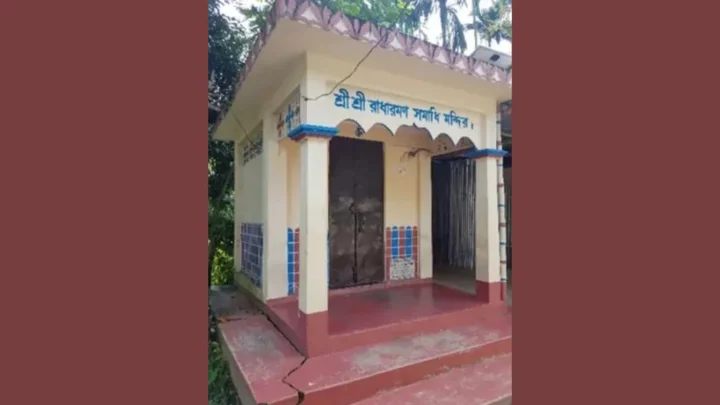
29 October, 2026 – Sunamganj, Bangladesh: An organisation named Keshabpur Islamic Organization has submitted a written petition to the local administration demanding that musical performances be prohibited near the memorial site of renowned Bengali mystic poet and folk musician Radharaman Dutta in Jagannathpur Upazila, Sunamganj district.
The demand, reportedly made on the grounds of protecting the sanctity of a nearby Muslim cemetery, has sparked concerns about preserving Bangladesh’s traditional folk culture while respecting religious sentiments.
On Monday afternoon, members of the organisation submitted the petition to Jagannathpur Upazila Nirbahi Officer (UNO) Md. Islam Uddin.
According to the petition, organising musical performances near the cemetery in the Keshabpur Bazar area of Jagannathpur Municipality could lead to disagreements among local residents and potentially disrupt public order.
Rafique Mia, a member of the organisation and one of the petitioners, stated that their objection was not to commemorative programmes honouring Radharaman Dutta but specifically to musical performances held near the cemetery.
He claimed that cultural programmes had not been permitted at the location adjacent to Radharaman Dutta’s memorial site and the cemetery for the past two years. When organisers reportedly attempted to arrange another event at the same location this year, the organisation submitted a formal objection to the administration.
Rafique Mia further claimed that the administration had taken their concerns seriously and assured them that the programme could be held elsewhere. However, his assertion that the UNO had announced a ban on the event was not supported by the administration’s statement.
UNO Md. Islam Uddin clarified that the petition primarily requested that musical performances not be organised near the cemetery. He did not confirm that any official prohibition had been imposed.
Radharaman Dutta, one of the most influential figures in Bengali folk music, is buried in Keshabpur village of Jagannathpur Upazila. He is particularly celebrated for his contributions to the development and popularisation of Dhamail songs, an important tradition in Bengali folk culture.
Every year, cultural enthusiasts and folk musicians gather near his memorial site to commemorate his life and musical legacy through Baul and other traditional folk performances. Local authorities have also organised commemorative programmes at the location on various occasions.
The demand to relocate these longstanding cultural gatherings has raised broader questions about the preservation of historical and cultural traditions associated with the celebrated folk poet.
While the petitioners have emphasised the importance of maintaining the dignity of the nearby cemetery, the issue has also drawn attention to the need to protect spaces traditionally associated with Bengali folk music and cultural expression.
The matter highlights the challenge of balancing religious sensitivities, public order, and cultural heritage. Considerations such as the cemetery’s boundaries, the location of performances, noise levels, and the nature of the events could help authorities determine an appropriate arrangement without unnecessarily restricting traditional cultural activities.